Animal Homes in English for Kids
Animal Homes in English for Kids: Words and Activities teaches where animals live, rest, hide, or receive care. Begin with pairs such as rabbit and burrow, horse and stable, and bee and hive. A habitat is a broad natural area; a home is a specific shelter or living place. Model sentences, sorting games, movement, and picture clues help children speak. Adapt the activities for beginners, confident speakers, and multilingual learners.
📥 Animal Homes: Vocabulary and Sentence Practice
Match animals with their homes, build complete sentences, and correct common mistakes.
Leave your email — we'll send the PDF to your inbox.No spam — the PDF plus one short reminder. Unsubscribe anytime.
Key Vocabulary: Animals and Their Homes
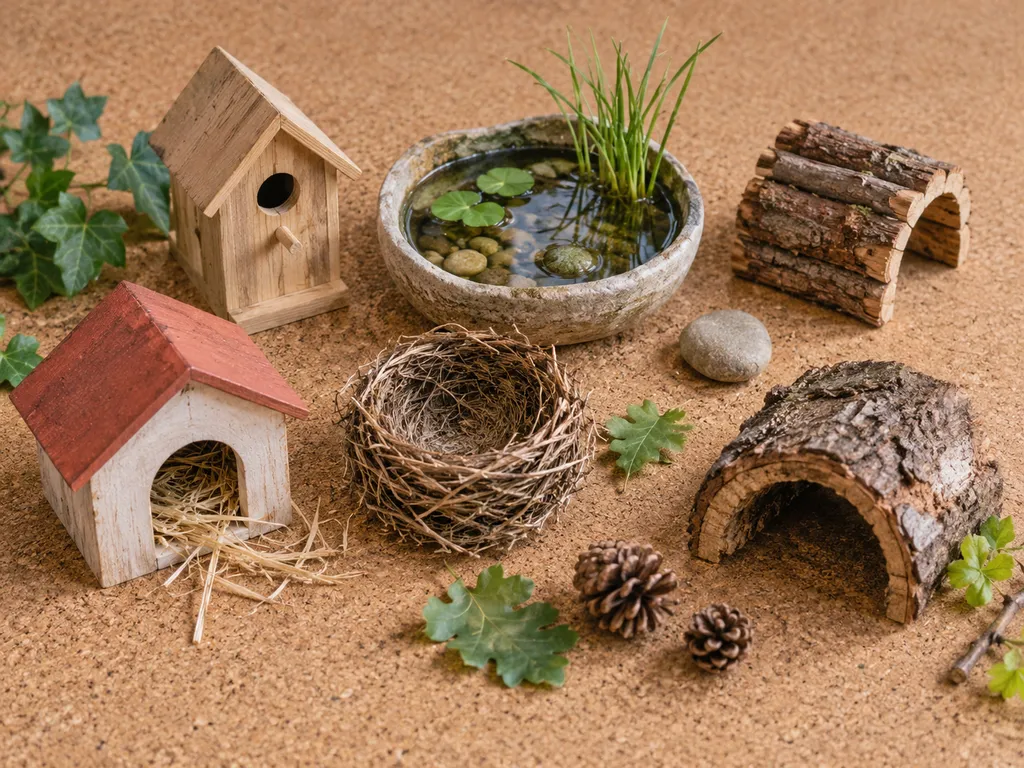
Animal Homes in English for Kids: Words and Activities separates natural homes, human-made shelters, and habitats. A burrow or den is a structure; a forest or ocean is a habitat; a stable or coop is built by people.
Start with eight to twelve pairs for a young beginner. Add unfamiliar words after your child uses the first set in sentences.
Answers vary by region and setting. A dog may live inside a family home, and wild bees may form a colony in a tree cavity instead of a beekeeper’s hive. Accept sensible answers, then choose the precise word for each picture or sentence.
Using the Words in Complete Sentences
When practising Animal Homes in English for Kids: Words and Activities, pair nouns with verbs. Patterns include lives in, sleeps in, builds, hides in, and returns to. These patterns turn matches into spoken English.
Begin with: “A rabbit lives in a burrow.” Change one part: “Two rabbits live in a burrow.” Older children can add detail: “The rabbit hides in its burrow when it senses danger.” One task builds grammar and vocabulary.
Questions prompt speech. Ask, “Where does a fox live?” or “Which animal builds its own shelter?” A beginner may point or answer with one word. Model the full sentence without rejecting the response: “Yes, that is a bird’s home. A bird builds it from twigs.”
Quick Practice: Who Lives Here?
Choose five animal pictures and five home pictures. Mix and match them, then say a full sentence. Add one wrong pair for your child to correct: “A horse does not live in a hive. It lives in a stable.”
Activities for Different Ages
Adapt Animal Homes in English for Kids: Words and Activities to attention span and language level, not age alone. A multilingual child may understand the concept before recalling the English word. Let the child point, act, or choose before speaking.
For school-age kids, use six large pictures and movement. Call out “hive,” “pond,” or “den,” then ask your child to move to the matching picture. Children can curl up like a fox, flap towards the bird-home picture, or hop beside a pond. Repeat one short sentence frame.
For school-age kids, sort cards into natural homes, habitats, and human-made shelters. Children can explain a choice with “because.” For school-age kids, compare how climate, safety, food, and human care affect homes. Learners can describe an animal without naming it, then trade clues for guesses.
Practice Ideas for Home and Lessons
Test retrieval before showing answers. Display a burrow, pause, then ask for the animal, home word, and a sentence. If recall stalls, offer two choices: “Is it a den or a stable?” Withdraw choices after several successful rounds.
Drawing works across languages. Your child draws an animal in its home and labels both in English. Younger learners can copy “bird — nest.” Older learners can add three facts: where the animal lives, what the home provides, and whether the animal builds or finds it.
Review words in short sessions across the week. Match pictures one day, ask questions another, then play a memory or clue game. LearnLink tutors can adjust word count, sentence length, and speaking support to the learner’s English level.
Common Mistakes and Useful Corrections
Children may say “A bird lives on a nest” because languages use prepositions differently. For location, teach “A bird is in the nest.” Use “on” for a surface: “The bird is sitting on the edge of the nest.” A stable pattern is easier to remember than an isolated rule.
Children may use house for every place. In English, home is the broad idea; house means a building for people. Animal homes include nests, dens, ponds, kennels, and stables. Encourage the precise noun once the child knows it.
Do not teach “a turtle lives in its shell” as a direct match for “a rabbit lives in a burrow.” A shell is part of the turtle’s body, not a separate home. A spider’s web mainly catches prey, though beginner materials group it with homes. Older learners can discuss these distinctions instead of memorising identical relationships.
- Practice naming five animal homes with children aged six to nine today.
- Use one picture book to match each animal with its correct home.
- Correct “a bird lives in nest” by adding “a” before “nest.”
- Try a six-card sorting game, then explain every incorrect match aloud.
- Review two confusing pairs tomorrow using spaced repetition and simple drawings.
When a word has several meanings or pronunciations, Cambridge Dictionary is a useful check before turning it into child-friendly examples.
Frequently Asked Questions
How Many Animal-home Words Should a Child Learn at Once?
School-age kids can work with six to eight pairs in one activity; older or confident learners may handle ten to fifteen. Choose an amount your child can use without constant guessing. Begin with familiar animals and full sentences. Add two or three pairs when recall becomes steady.
Should Our Tutors Teach Habitat Words and Home Words Together?
Yes, but mark the difference. A habitat is a broad environment, such as a forest, desert, river, or ocean. A home or shelter is a specific place, such as a nest, den, burrow, or stable. Animal Homes in English for Kids: Words and Activities works best when children sort examples and explain their choices.
What If My Child Gives a Different Correct Answer?
Ask what the child means before correcting it. Animals can use more than one place, and regional English varies. A sheep may stay in a barn, field shelter, or sheepfold. Confirm the idea, then connect it to the picture: “Yes, sheep live in fields. In this picture, they are resting in a barn.”
How Can a Multilingual Child Remember the English Words?
Connect each English word to an image, action, and sentence instead of translation alone. Your child might draw a burrow, pretend to dig, and say, “A rabbit lives in a burrow.” Cross-language comparisons can reveal patterns, but final recall should prompt the English word directly.
- Start with six familiar pairs. Match each animal to its home and say one complete sentence.
- Practice through pictures and movement. Ask where each animal lives, then act out the answer.
- Check recall later. Revisit the same words on another day before adding new vocabulary.
A short one-to-one lesson can show what level and pace fit your child — book a trial English lesson.
Stay updated on our latest tips and resources by following us on Instagram LearnLink.